
The parallel reality of intensive pig-farming in Hungary and Romania: Heavy pollution of the groundwaters covered by a bureaucratic scheme
Ilustraţie: Diana Dupu
A cross-border investigation done by Atlatszo and Context.ro shows that large bodies of groundwater in Romania and Hungary are polluted by industrial pig farming. While companies that run industrial pig farms and local environmental agencies allege they protect water and soil from damage, official reports say otherwise. We visited 10 pig farms to learn how the environment is protected; we analyzed hundreds of documents and conducted dozens of interviews, and found that pig farms are the ones that check whether they pollute. The result: on paper, the environment is protected; on the ground, the water is contaminated with dangerous chemicals.
Hungary and Romania produce, on average, between 300-400 thousand tons of pork meat per year In the 2000s, Hungary’s pork meat sector averaged about 5 million pigs, while after 25 years it dropped to almost half of what it was. While the overall gross number of pigs shrank, the concentration of production increased.
Atlatszo.hu and Context.ro reporters gathered documents, conducted interviews, and visited more than 10 areas where industrial pig farming is practiced in Hungary and Romania. Csongrád-Csanád county in Hungary and Timis county in Romania are two hotspots for large-scale farms.
A review of a large farm in Bátaszék(Csongrád-Csanád county) illustrates the scale: around 6,000 pigs are kept there, and the slurry system includes an insulated storage basin with a capacity of 12,150 cubic meters. Manure is spread on agricultural land only under soil-protection authorization, because its nitrogen and phosphorus content can pollute soil and groundwater if poorly managed. Our reporting did not find that this specific pig farm was a polluter.
However, two studies show a direct link between large-scale farms and nitrate pollution. In one study, data showed that nitrate leaching was linked to both precipitation and pig manure or fertilizer use. A separate long-term groundwater study in the Great Hungarian Plain found severe nitrate pollution in shallow groundwater, with pre-sewerage nitrate concentrations exceeding the 50 mg/l limit in most monitoring wells. Its authors also found that nitrate-chloride ratios pointed to anthropogenic sources, including septic tank effluent and extensive manure use. Our investigations show that similar patterns recur across the border in Romania.
The loophole in the system: just 700 euros in fines
Local public authorities in Romania and Hungary are ensuring that waste disposal is regulated, and their data show the same pattern: a low number of breaches. There is one critical aspect: the pig farms are the ones who determine whether they pollute, and the civil servants just check the paperwork.
The Csongrád-Csanád County Government Office says manure storage can be authorized only in technically protected facilities, and water authorities may require groundwater monitoring systems; the use of slurry on farmland must be reported to the soil-protection authority. Each year, the county officials receive 10-15 complaints, and according to the Csongrád-Csanád Government Office those are investigated, but in the past five years none have been rendered a serious environmental crime.
However, most of the monitoring is done by the intensive livestock farms. They are the ones taking samples of the used water, and they keep records of the manure disposal on the fields, while the authorities simply check the self-made reports of the farms when coming in the annual inspections. In the past five years, the national Hungarian authority imposed only one fine of 700 euros in 2024 for operating in a manner that differed from the integrated environmental permit.
The view from the other side
Fitos Gábor, head of the Hungarian pig breeders’ and keepers’ association, said odour is the most common source of conflict around farms, often because settlements have expanded toward units that have operated for decades. He added that modern slurry technologies and injection spreaders have reduced ammonia emissions, but odors can still occur during manure application once or twice a year.
The experience of a large farm near Szeged shows the same tension from the producer’s side. Owner Laczi Róbert says his 850–900-sow farm uses a biogas system: slurry is treated in a closed system to produce digestate, methane is used to generate electricity, and the remaining liquid is injected underground rather than sprayed. Yet complaints have not disappeared. His argument is that the city has moved closer to the farm, not the other way around. Around the site, suburban development has expanded over decades, creating new neighbors for an agricultural facility long part of the landscape.
Across the border in Romania, a team of Context.ro reporters visited ten farms and the main slaughterhouse to see what is the real impact of these farms upon the environment and the neighboring communities, as opposed to the perfect reality claimed inside the reports. We went through hundreds of documents, interviewed experts, and discovered that several bodies of groundwater beneath pig farms are polluted across a surface area spanning two counties.
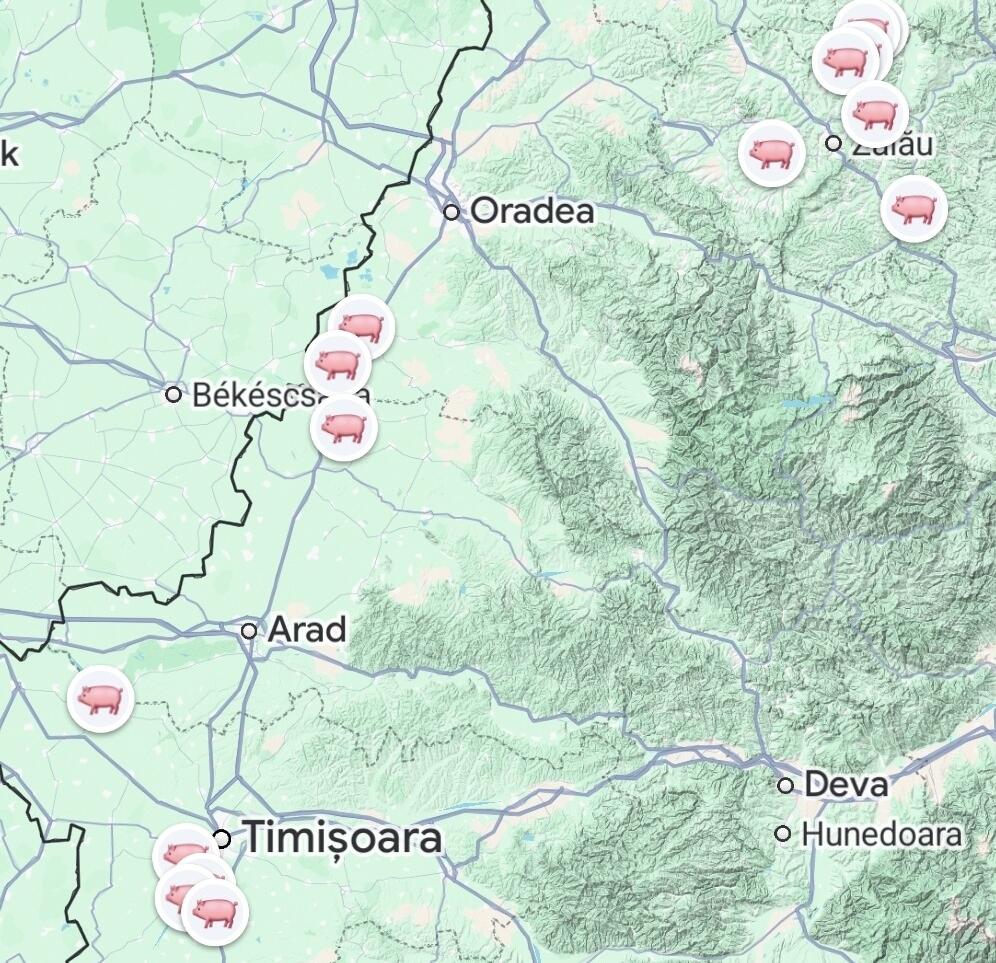
Pig farms visited by Context.ro reporters. Source: Google Maps screenshot
Like in Hungary, we found the same bureaucratic loophole: pig farms collect their own samples and contract with the experts who decide whether they pollute. Meanwhile, all the state authorities do is check the paperwork, making everything look “green” on paper, while the on-site reality tells a totally different story.
Out of the counties in Western Romania, Timiş county is the one with the biggest density of pig farms. They were built during the communist regime, then they were privatized and sold to foreign companies after the 1989 Revolution. Currently, they are highly important to the local economy, yet they also pose significant environmental risks.
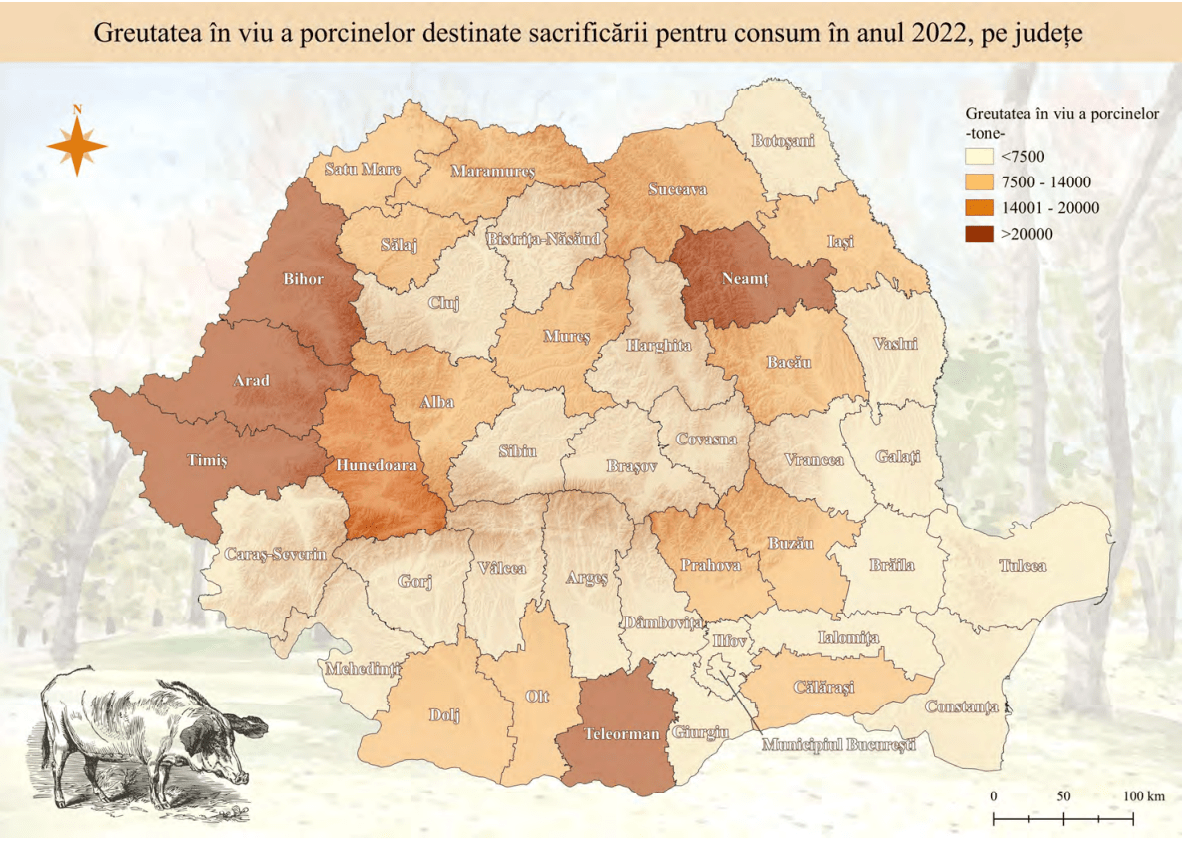
Pork meat production in Romania. Timiş county and the Western region of Romania have the greatest number of slaughtered pigs, according to the National Institute of Statistics
The moment you enter Parţa, a small village in Timiş County, an awful, stinging smell strikes you. The locals say it’s because of the industrial pig farm located right outside the village.
The awful smell is mentioned in official documents as well, but when it comes to pollution, the pig farms located right outside the village got the green light from the Environmental Guard – the state authority responsible for checking the environmental permits, as well as the measurements of the environmental impact of all potentially polluting economic agents. According to the documents checked by the Environmental Guard, there was no indicator of air, soil or water pollution.
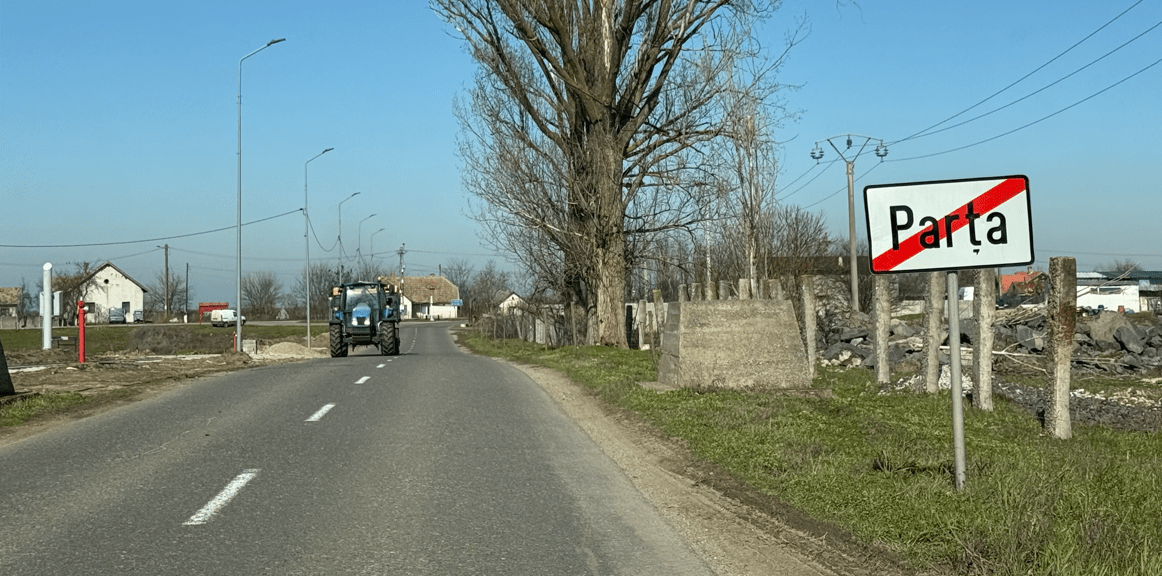
Parţa village, in Timiş county, Western Romania. Source: personal gallery
These documents, however, are based on analysis reports of the samples which are collected, stored and delivered by the farm to a lab for whose services the farm pays for. We discovered that the wastewater and liquid manure samples are collected by the farms, that the labs contracted by the same farms do not take responsibility for the integrity of the samples, and that the national authority that should have checked the environmental impact of these economic operators only goes through the documents provided by the farms themselves.
A report from the National Administration of the Romanian Waters – the national agency monitoring the quality of the flowing and underground water -, published in 2025, mentions the farms in Timiş county operated by a local company that has Chinese ownership on a list of possible polluters of three bodies of underground water.
According to a study conducted by this Administration, the underground water of one of the bodies is heavily polluted and in a chemically weak state, with the Chinese-owned company as the potential cause. For another body of water, Smithfield’s agricultural and zootechnical activities are identified as major sources of pollution. The total surface of underground water to the pollution of which Smithfield contributes is 14.625 square kilometers, which means twice the size of Timiş county.
48 farms in Timis are operated by Comtim, a former state-owned company set up by the communist regime in 1967. After 1989 the company was privatized and changed ownership several times and now is part of the Chinese multinational WH Group.
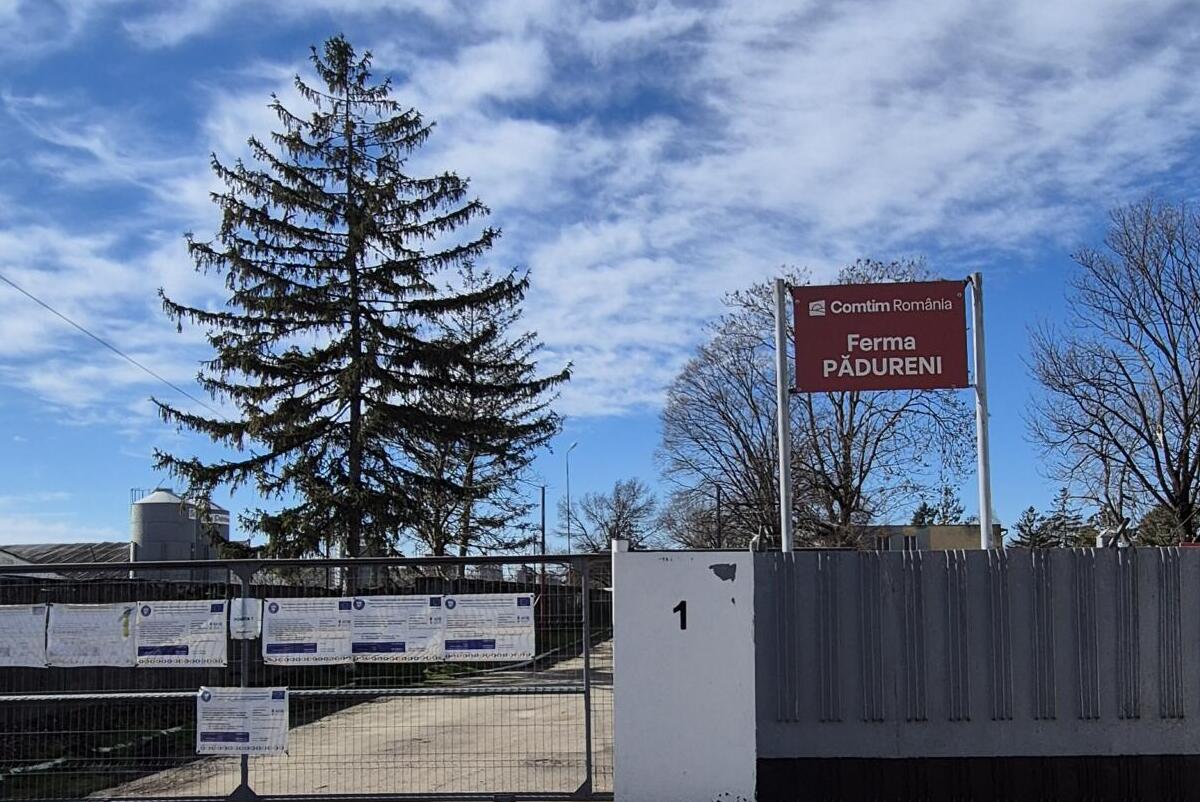
One of Comtim Romania’s farms in Timiş county. Source: personal gallery
In a reply for Context.ro, Comtim insisted that their name appears on an “extended list of potential polluters of body waters, without being clearly confirmed as a source of pollution”, and that “the company takes their responsibility for the protection of soil and underground waters very seriously”.
The fish died a natural death…right behind the slaughterhouse
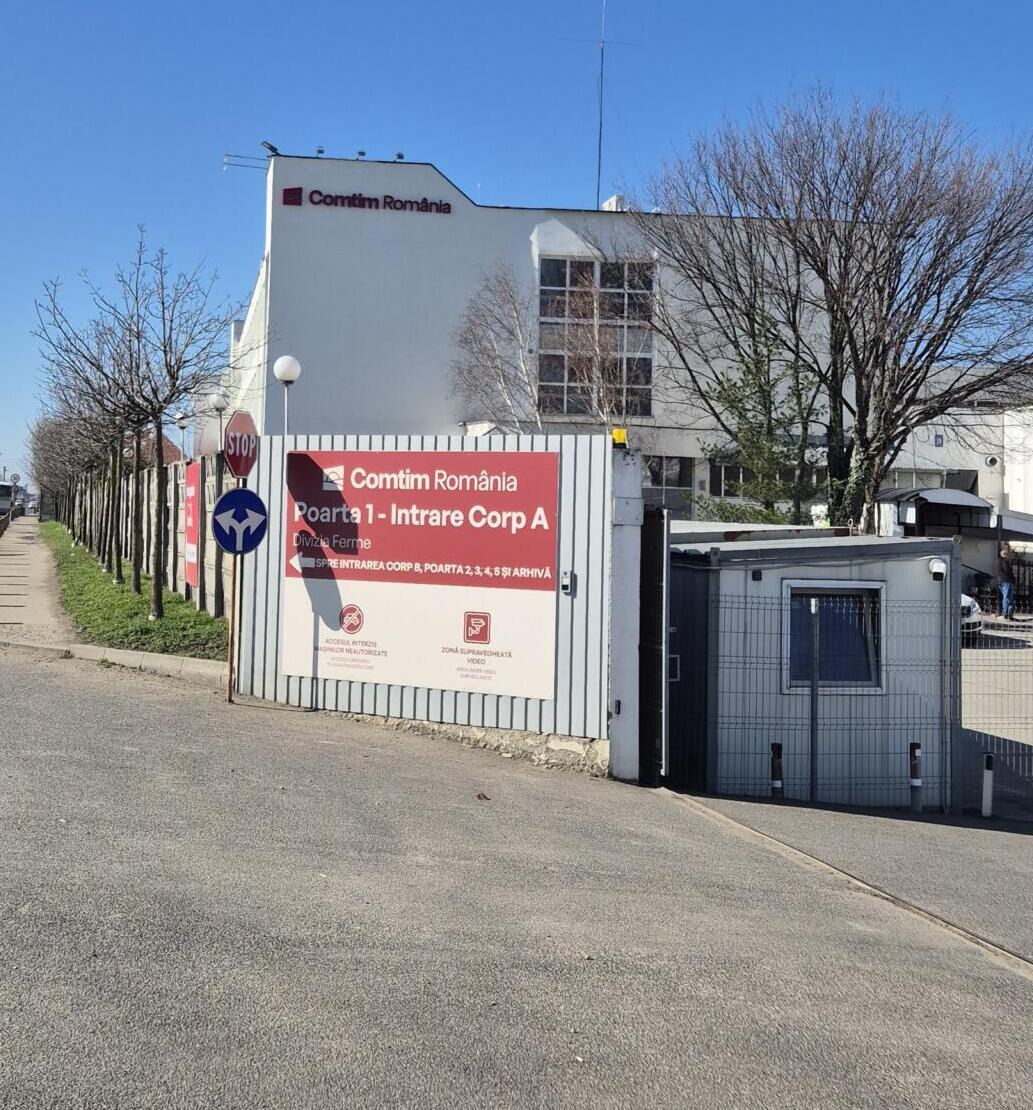
Comtim main slaughterhouse, located near Timişoara in the village of Utvin. Source: personal gallery
The Utvin Slaughterhouse, located right outside Timişoara – one of the biggest urban centers of Romania -, is the final destination for the pigs raised in Comtim industrial farms. Almost a million pigs are slaughtered in Utvin for meat production, and the papers are once again as clean as it gets when talking about air, soil or water pollution. The residents from Utvin, however, painted a totally different picture: “You can smell the sacrificed animals every day, in the morning, at noon, and in the evening.” Another resident claimed that the smell is “far worse than the average smell of animals”.
The same local people from Utvin told us about a pipe coming from the slaughterhouse and ending up in Bega – the main water channel crossing Timişoara -. We followed their descriptions, and we found indeed an approximately 30cm-diameter pipe located right in the back field of the slaughterhouse, which pumped brown water into the Bega river.
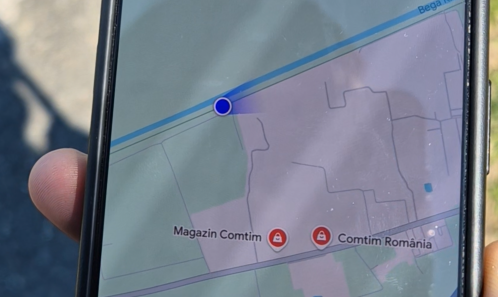
Comtim Slaughterhouse is located close to the Bega river. Source: personal gallery
“Clean water flows into the emissary. It is completely legal for a wastewater treatment plant to discharge into an emissary, provided that all quality parameters of the discharged water are within the legal limits,” explained Luci Muşuroi, the chief commissioner of the Timiș Environmental Guard, when asked about the pipeline. “When we conduct inspections, we request these reports (editor’s note: from the wastewater treatment plant inside the slaughterhouse). In 2025, we did not have a single instance of exceeding the threshold,” she further stated.
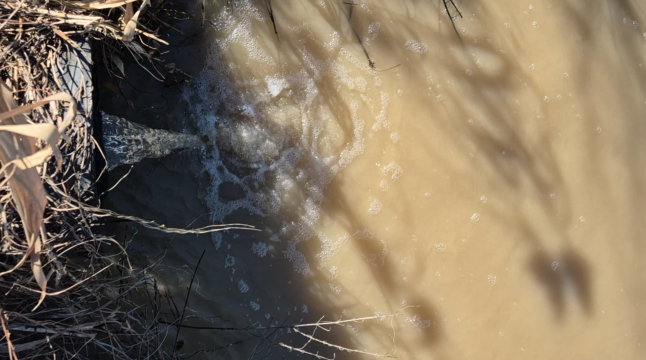
The water flowing from the pipe into Bega river. Source: personal gallery
When asked about the high rates of fish deaths that the residents of Utvin complained about, the chief commissioner answered that it is due to “natural phenomena, surely.” More precisely, that “there were situations where, after heavy rains, the Timișoara wastewater treatment plant had to be bypassed because the flow was very high, and then, due to turbidity, the fish died. It was all due to the high temperatures; the lack of oxygen led to several fish dying in the river, so it was not “due to the fact that clean water goes from the treatment plant into the Bega; it is from natural phenomena.”
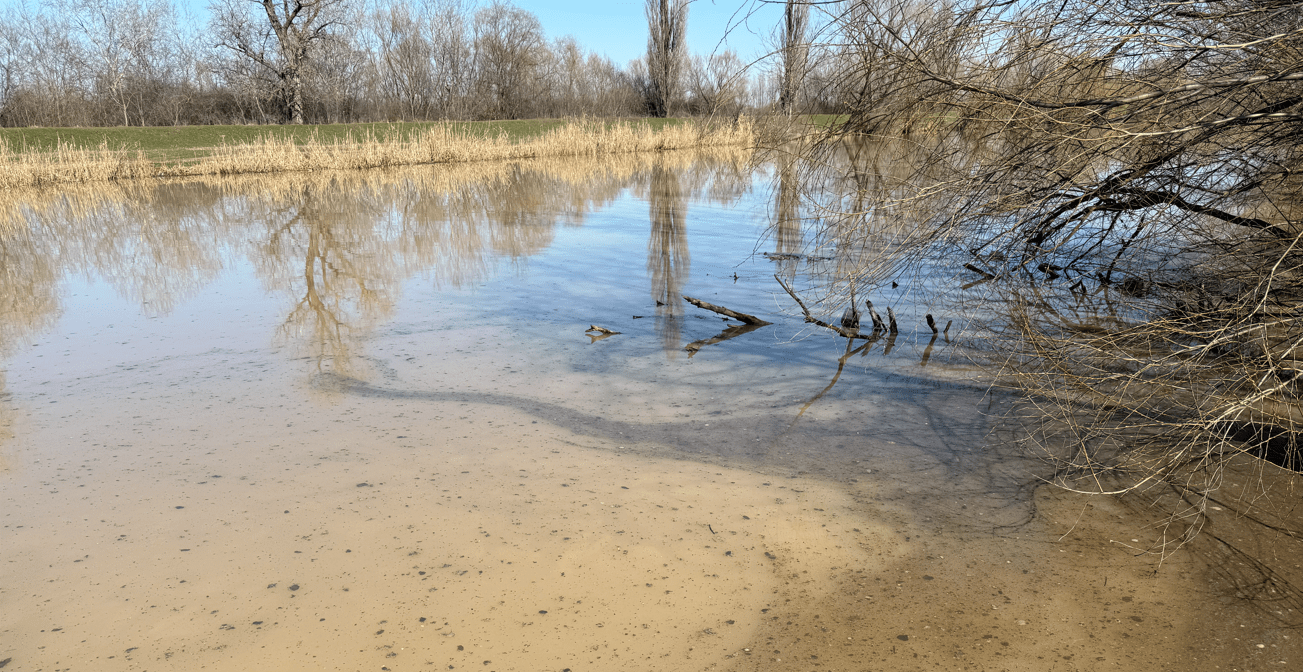
The waters of Bega river behind Comtim slaughterhouse. Source: personal gallery
Clean permits for self-collected samples
During our investigation, we discovered that the Environmental Guard does not conduct its own measurements, but only verifies the farms’ documents. In our case, Comtim has always declared on paper that it does not pollute, and the samples analyzed by the labs which were contracted by Comtim appeared to be inside legal parameters as well.
“Economic operators are more and more receptive to environmental issues; they try to comply more and more. Most of the time, there are no exceedances of the measurable indicators,” Luci Muşuroi, chief commissioner of the Environmental Guard of Timiş County, told Context.ro. The chief commissioner declared that there were certain complaints regarding the activities of the pig farms, and the Guard responded by conducting inspections.
We also asked whether, when the Environmental Guard conducts an inspection, they look strictly at the documents, and we were calmly answered: “Yes.” So we wondered who verifies if the perfect data in the reports actually matches the reality.
“Nobody checks them, that is the reality”
Reading the annual environmental reports for farms in Timiș County, we found that most samples are collected by the client. More precisely, the farms “collect”, “store”, and „deliver to the lab” their own wastewater and liquid manure. The private laboratory then analyzes the samples brought by each farm, and the lab services are paid for by the very same farm. The analysis certificates display the phrases: “samples were collected under the client’s responsibility” or “the sample was collected by the client” and “the responsibility for sampling, preservation, and transport of samples lies entirely with the client.”
A specialist in soil pollution analysis explained to us that there are doubts that the farms are doing everything possible to ensure that the analyses they order and pay for reflect reality.
Alina Bădilă represents the Association of Soil Science Specialists, an organization comprising national experts in pedology, part of the OSPA network—the Offices for Pedological and Agrochemical Studies —which conducts some of the field analyses on the impact of pig farms on soil. She explained that, in practice, nothing prevents the farms from requesting that the analyses conceal the truth.
“There is a risk that the result (editor’s note: of the analysis reports) will be exactly in accordance with the beneficiary’s requirements, meaning that if the beneficiary requests it a certain way, that is exactly how it is given to them, even if it has nothing to do with the reality. The certification order does not provide for this aspect of transmitting the data. Nobody checks them, that is the reality, nobody verifies them. The analysis method is very important, but this is where the Environmental Guard should ensure compliance,” stated Alina Bădilă, a pedologist and PhD in agrochemistry, in an interview for Context.ro.
Industrial pig farming has a significant impact on the environment. The most polluting pig and poultry farms are responsible for 30% of total ammonia emissions in the EU, while the pig farms alone produce between 9% and 14% of the global greenhouse gases linked to the agricultural sector. Other harmful substances produced by this activity include methane, phosphorus, and nitrous oxide.
During 2021–2024, 2% of Romania’s total methane emissions were due to the pig farming industry, along with over 9% of ammonia emissions. By comparison, poultry farming accounts for 0.2% of total methane emissions (10 times less) and about 7.5% of total ammonia emissions nationwide. Over the course of four years, the farms generated nearly 60 thousand tons of ammonia, according to data submitted to a request from Context.ro by the National Agency for Environment and Protected Areas.
The main pork producers in Romania are Comtim România, Premium Porc Sibiu, Suinprod, Agrikilti, Agrova Pork Farm, Degaro, Porcellino Grasso, Landbruk, Revarlino Grup, and CRCC. Among these, Comtim is the largest producer in the country, with over one million pigs marketed annually since 2018. Comtim farms span across Timiș and Arad counties.
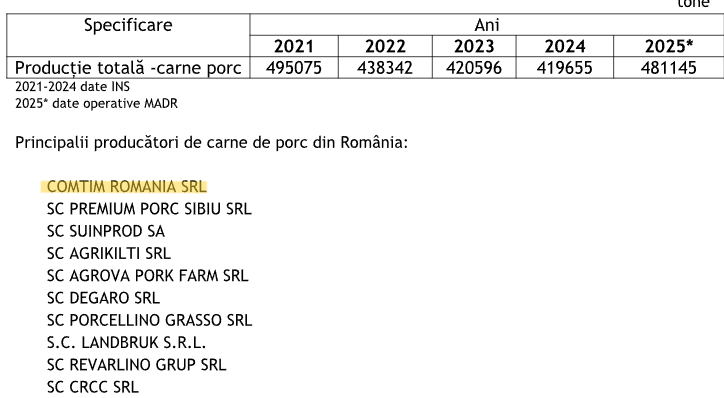
The list of the main pork meat producers in Romania, according to the Ministry of Agriculture
The Environmental Guard, concerned with the economic interest of the pig farms
We analyzed the fines issued by the state authorities to all farms in Romania between 2011 and 2025, and discovered that the state recovered from fines about 1,2 million euros, even though this industry generates annual revenues of approximately 780 million euros.
Up until 2021, the Environmental Guard informed us that they had imposed 5 fines in Timiş county and shared the names of the companies that were fined; Comtim was not among them.
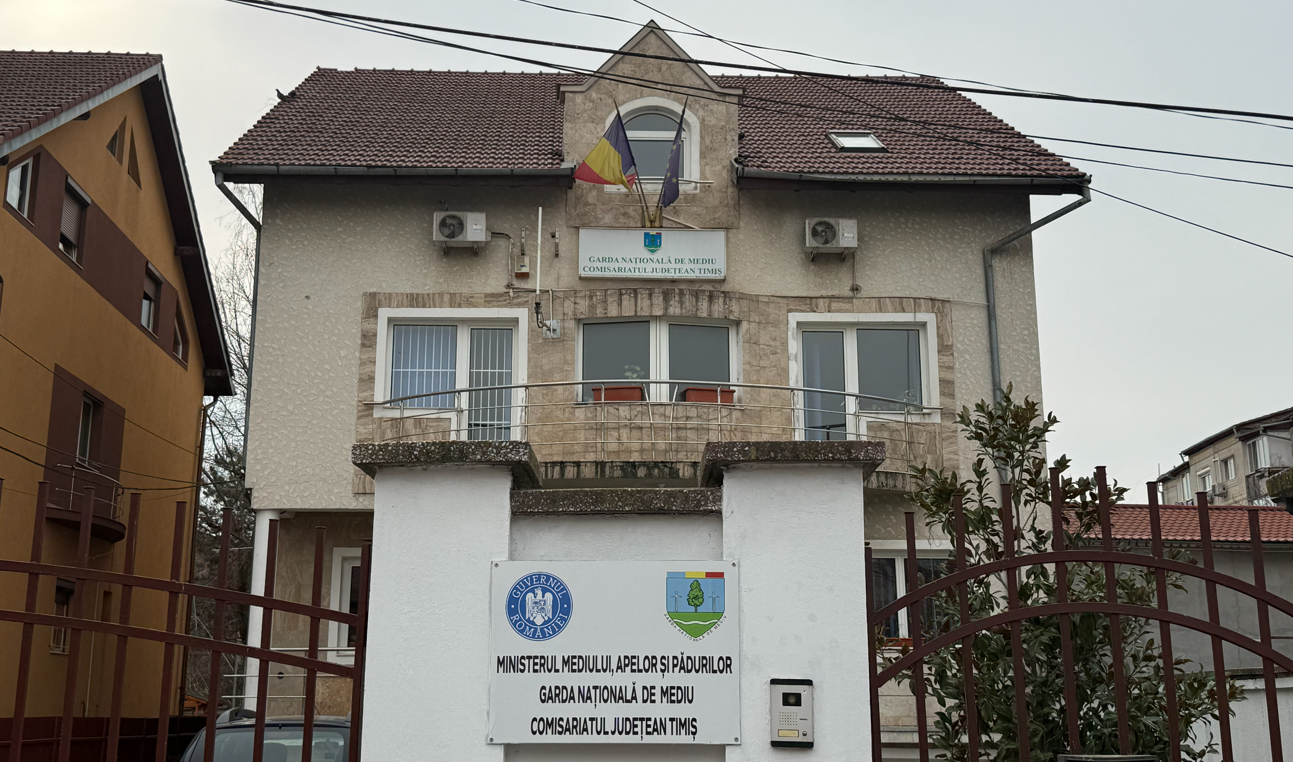
The National Environmental Guard: Timiş office. Source: personal gallery
Between 2022 and 2025, Timiş Environmental Guard recorded the same number of inspections at the end of each year: 38, as well as 0 irregularities, 0 warnings, and consequently 0 fines. With one big exception.
In 2023, a 60,000-euro fine was issued by the Timiş Environmental Guard to Comtim. The state agency obscured the company’s name, alleging that it was not public-interest information. The company admitted on the record the fine and mentioned that it “was an isolated event which does not reflect a recurring situation in the company’s activity.”
A single significant fine in 15 years
Comtim Romania, which received only one fine from the Environmental Guard in the past 15 years is the largest pig meat producer in the country, with a net revenue in 2025 of more than 300 million euros, and a profit for 2025 of nearly 50 million euros, more than twice the profit of 2024.
“What must be kept in mind is that livestock activities generate specific odors. A distinction must be made between olfactory discomfort and pollution. Pollution involves exceeding measurable environmental quality indicators, whereas olfactory discomfort, the smell, involves an impact on citizens’ comfort. So, generally, citizens associate smell with pollution, but fortunately, the olfactory element is not pollution”, the chief commissioner of the Timiș Environmental Guard told Context.ro.
Authors: Attila Biro, Oana Manitiu, Matei Capotă – Context.ro, Csaba Segesvári – Átlátszó; Pictures: Context.ro images, Google-maps; Cover by: Diana Dupu. This investigation was developed with the support of Journalismfund Europe.
Despre autor: Oana Maniţiu, Matei Capotă

Pe aceeași temă












Pe aceeași temă
